30-Hours Professional Diploma in Biomedical Engineering
Credit hours
3
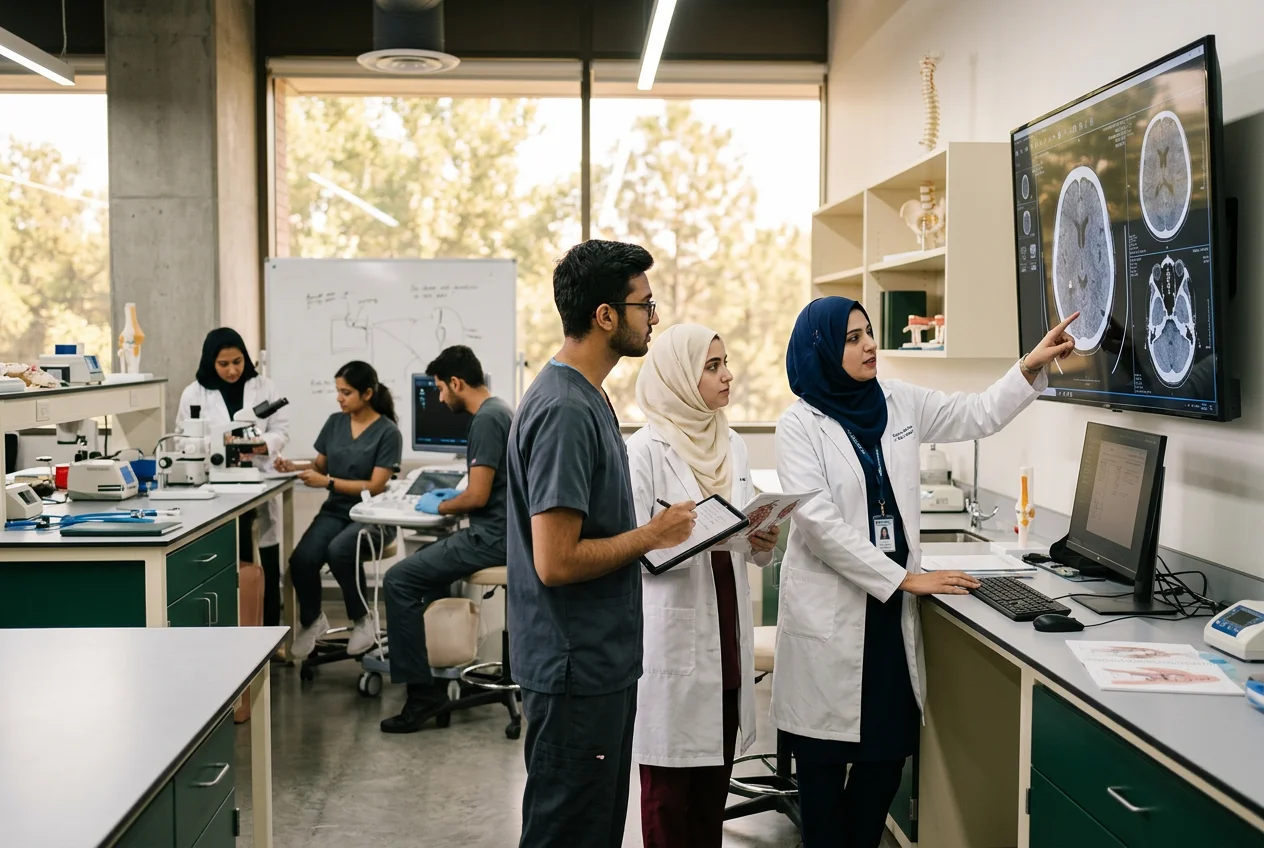
Engineering meets medicine in this overview of biomedical engineering and its uses in healthcare. Learners study basic anatomy and physiology, medical instruments, biomechanics, biomaterials, imaging technologies such as MRI, CT and ultrasound, signal processing, and assistive and rehabilitation technology. A good starting point for engineering or science learners curious about the healthcare technology sector.
What you'll cover
- 01Introduction to Biomedical Engineering and Its Applications
- 02Basic Human Anatomy and Physiology for Engineers
- 03Medical Instrumentation and Diagnostic Devices
- 04Biomechanics and Human Motion Analysis
- 05Biomaterials: Properties and Clinical Applications
- 06Medical Imaging Technologies: MRI, CT, and Ultrasound
- 07Biomedical Signal Processing and Data Interpretation
- 08Rehabilitation Engineering and Assistive Technologies
More in Allied Health and Clinical Sciences
- Allied Health and Clinical Sciences
30-Hours Diploma in Anatomy and Physiology of the Human Body
Using clear anatomical terminology, learners work through the major body systems one by one. The units cover the skeletal and muscular systems, heart and circulation,…
View course - Allied Health and Clinical Sciences
30-Hours Diploma in Bioinformatics
Learners are introduced to the computational side of biology, starting with biological databases, sequence formats and data standards. Units cover DNA and protein…
View course - Allied Health and Clinical Sciences
30-Hours Diploma in Diabetes Management
Learners explore the types of diabetes, how it is diagnosed and monitored, and how blood glucose is managed with medication, diet and physical activity. The programme…
View course
30-Hours Professional Diploma in Biomedical Engineering